
Travel guide · Morocco · By the Turismo a Marruecos team · 8-minute read

Morocco is a country of contrasts. On a single trip you can go from the bustle of a medieval medina to the total silence of the dunes, from a Berber village clinging to a mountainside to a fishing town that smells of the sea. That mix of historic cities, desert, mountains, traditional villages and Atlantic beaches is exactly what makes it so hard to forget.
If you are planning your trip, this guide brings together 10 must-see places in Morocco. It is not a closed list or a ranking: it is a selection to help you understand what each region offers and decide which places suit your time, pace and interests.
- Marrakech
- Fes
- The Sahara Desert
- Chefchaouen
- Aït Ben Haddou
- The Atlas Mountains
- Essaouira
- Casablanca
- Meknes and Volubilis
- The Todra and Dades Gorges
1. Marrakech
Central Morocco · Imperial city
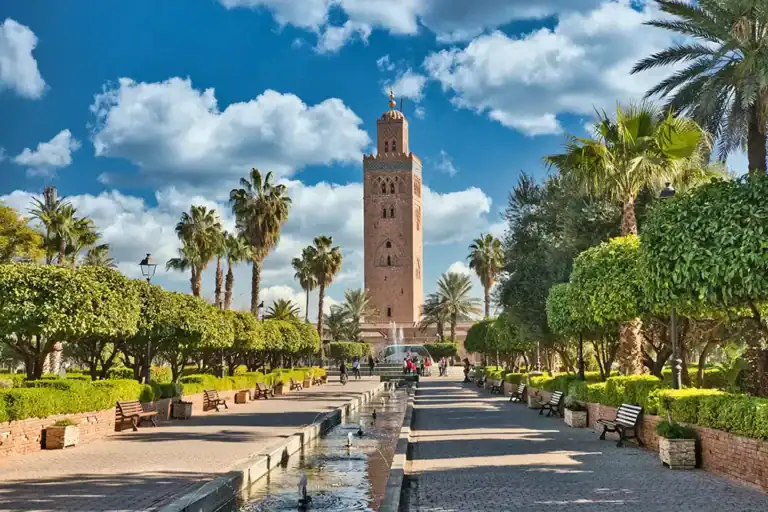
Marrakech is one of Morocco’s most fascinating cities and, for many travellers, the gateway to the country. Its medina is full of endless souks, palaces, traditional riads and the famous Jemaa el-Fna square, which changes throughout the day: spices and fresh juice in the morning, storytellers and musicians in the afternoon and a huge open-air food market when the grills are lit at sunset.
Beyond the square, set aside time for the Majorelle Garden, with its intense blue among palms and cacti, and for the Bahia Palace, a superb example of Moroccan architecture and decoration. It is a city to explore without a map, following the scent of spices and accepting that getting lost is part of the experience.
Local tip
Spend at least one night inside the medina. Traditional riads have cool, quiet courtyards that contrast with the street, and you can head out to the square once the heat has dropped.
2. Fes
North · Imperial city

Fes has one of the largest and most authentic medieval medinas in the world. Walking into Fes el-Bali takes you back centuries: alleys so narrow a loaded donkey barely fits, tanners, carpenters and potters working as their ancestors did, and old madrasas with tiled courtyards and carved plaster.
It is the city of knowledge and craftsmanship, and the most traditional of the imperial cities. Here the trip is not about ticking off monuments but about watching: the rhythm of the artisans, the sound of hammers on copper, the call to prayer echoing between ancient walls.
Local tip
In Fes a local guide is not a luxury but a real advantage. The medina has thousands of alleys and it is easy to walk in circles for hours.
3. The Sahara Desert
South-east · Merzouga and Erg Chebbi
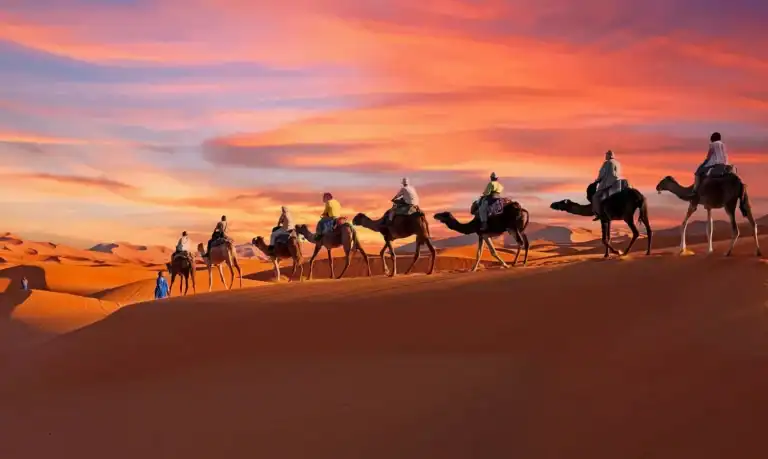
Sleeping at a camp among the Sahara dunes is one of the most special experiences in Morocco, and for many travellers the memory that stays forever. From Merzouga, the dunes of Erg Chebbi rise like a golden wall up to 150 metres high.
The experience has its own rhythm: riding a camel as the light turns orange, climbing a high dune to watch the sun sink into the sand, dinner by the fire with Berber music and a night under a sky you never see in a city. In the morning, breakfast and the ride back among the first shadows of the day.
Local tip
Choose a camp that matches your budget, from standard to luxury, and check whether the camel or 4x4 transfer is included. Winter nights in the desert are cold: bring a warm layer even if you travel in summer.
4. Chefchaouen
Rif Mountains · North

Known as the blue city, Chefchaouen stands out for its streets painted in every shade of blue: indigo, sky blue, turquoise. Against white walls and pots of geraniums, the effect is almost unreal.
It is a place to wander without a plan, discover picturesque corners, sit on a terrace in Outa el-Hammam square and browse local crafts: textiles, pottery, leather and the olive oil of the Rif. Set at the foot of the mountains, it is also a good base for short walks.
Local tip
Arrive early or stay the night. Day-trippers leave in the afternoon and the town gets back its quiet rhythm.
5. Aït Ben Haddou
South · Near Ouarzazate

This impressive ksar near Ouarzazate is a cluster of adobe buildings stacked on a hill and one of the most photographed places in Morocco. Its traditional architecture and arid setting have made it the backdrop for many films and series.
A UNESCO World Heritage Site, Aït Ben Haddou is explored on foot, climbing between passages and earthen houses to the top, where the view over the Ounila valley is spectacular. At sunset, when the adobe turns red, it is one of the most beautiful moments of any route through the south.
Local tip
Aït Ben Haddou is a natural stop between Marrakech and the desert. Cross the river to see it from the other side for the best photos.
6. The Atlas Mountains
Central Morocco · High, Middle and Anti-Atlas
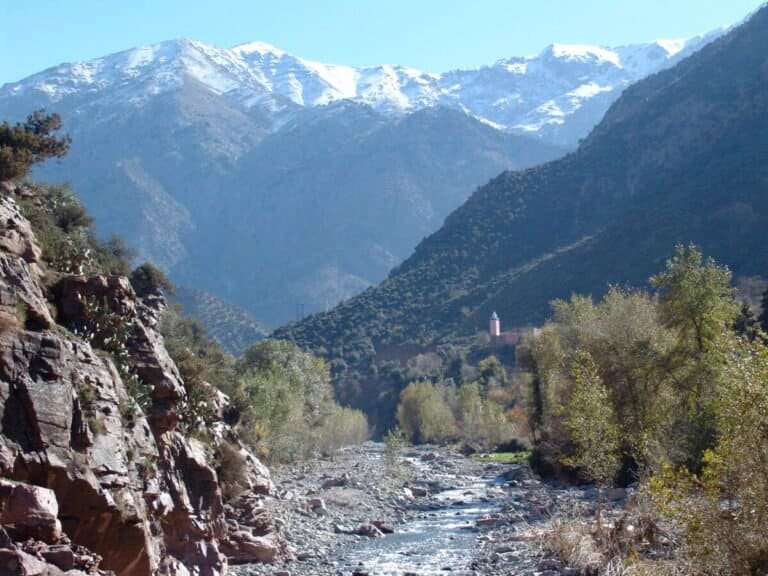
The Atlas Mountains offer spectacular scenery, Berber villages and routes for every level. The High Atlas has the highest peaks in North Africa, with Toubkal at the top, and in winter its slopes are covered in snow just a few hours from the heat of Marrakech.
Crossing the Tizi n’Tichka pass, stopping in a mountain village for mint tea or walking among almond and walnut trees is a great way to combine nature, culture and adventure. Much of the Berber population lives here, and their hospitality is one of the country’s great treasures.
Local tip
There are routes for every level, from one-hour walks to multi-day treks. In winter, check the state of the mountain passes before setting off.
7. Essaouira
Atlantic coast · West

Essaouira is a relaxed coastal town: historic ramparts facing the ocean, a fishing port full of gulls and blue boats, and beaches ideal for surfing and kitesurfing thanks to the constant wind.
Its medina, also a World Heritage Site, is perfect for wandering and for enjoying grilled fresh fish and seafood. It is the perfect counterpoint to the intensity of Marrakech.
Local tip
Essaouira’s wind is famous. It is less a beach for swimming all day than a place for walks along the shore and sunsets over the ramparts.
8. Casablanca
Atlantic coast · West
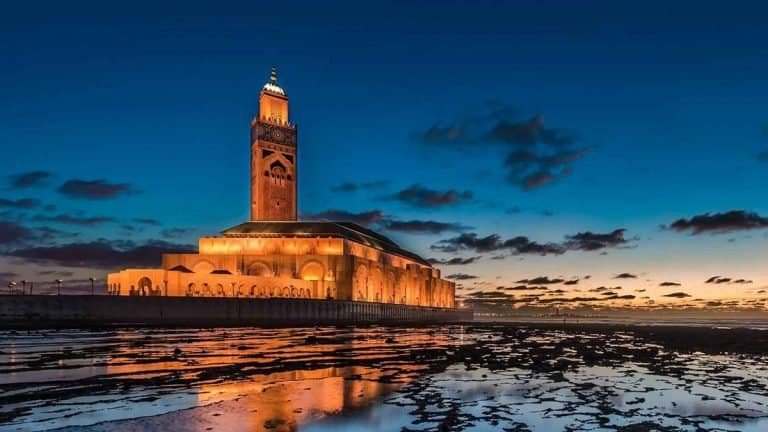
Unlike Fes or Marrakech, Casablanca has a different feel: wide boulevards, art deco architecture, the Habous district, a modern food scene and the monumental Hassan II Mosque over the ocean. Many travellers use it as their arrival or departure point, and it deserves at least half a day.
Local tip
Non-Muslims can visit the inside of the Hassan II Mosque on guided tours at set times. Check the times on the day and arrive early, as places are limited.
9. Meknes and Volubilis
North · Imperial city and Roman ruins
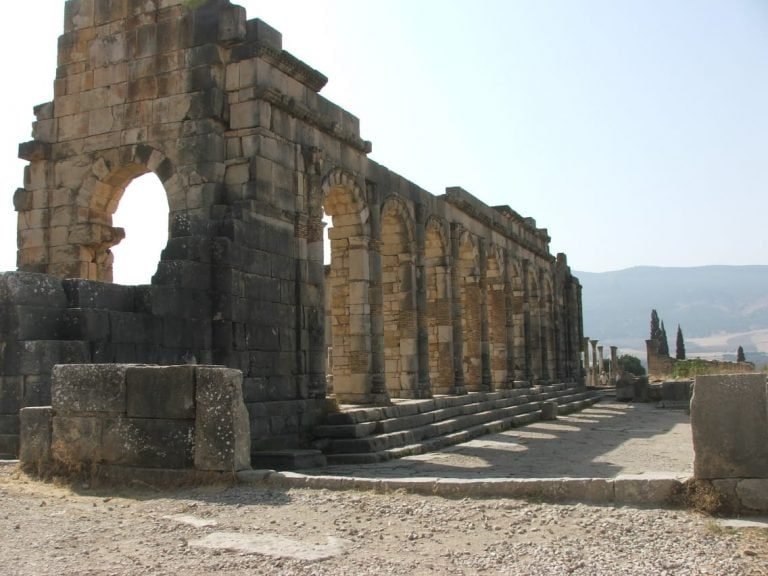
Meknes is one of Morocco’s imperial cities, with major monuments such as the monumental Bab Mansour gate, the royal stables, the Heri es-Souani granaries and El Hedim square. It sees far fewer tourists than Fes or Marrakech, and you can feel it in its streets.
Nearby are the Roman ruins of Volubilis, with mosaics and archaeological remains that reveal the region’s Roman past. Set among olive groves and mountains, it is one of the most interesting archaeological sites in the country.
Local tip
Meknes and Volubilis combine perfectly in a single day from Fes. Visit Volubilis early to avoid the heat.
10. The Todra and Dades Gorges
South-east · High Atlas and Dades Valley
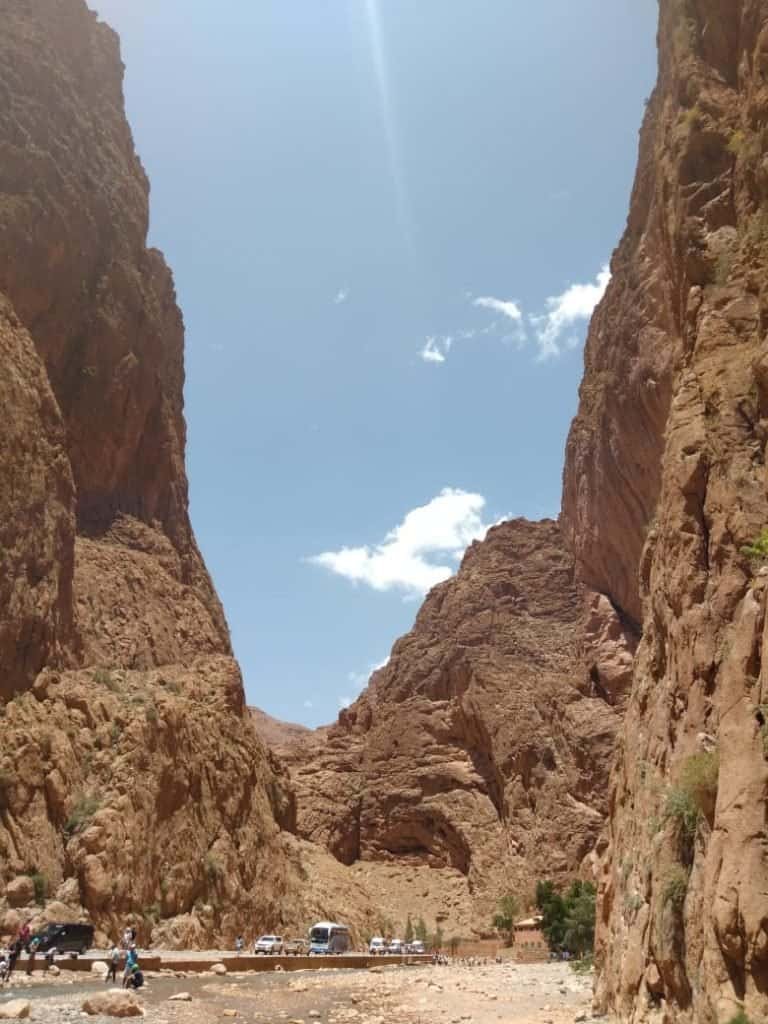
The Todra and Dades gorges offer some of the most impressive natural scenery in Morocco. In the Todra, vertical walls up to 300 metres high close in over a stream and a palm grove; in the Dades, the road winds between rock formations that look hand-carved.
Their valleys and villages make this route ideal for travellers who want fewer monuments and more landscape: earthen kasbahs, palm groves, riverside gardens and roads through scenery that seems from another planet.
Local tip
For photography, the best light in the Dades is early in the morning and late in the day. It is the natural stop between Aït Ben Haddou and the Merzouga desert.
How to combine these 10 places
Ten places are too many for two or three days, but they fit very well into a classic one-week circuit. This is the most popular combination among our travellers:
| Days | Route |
|---|---|
| 1–2 | Marrakech: medina, Jemaa el-Fna, Majorelle Garden and Bahia Palace. |
| 3 | Tizi n’Tichka pass, Aït Ben Haddou and the Dades Valley or Todra Gorge. |
| 4 | Merzouga: camel ride, sunset on the dunes and a night at a Sahara camp. |
| 5–6 | North to Fes and its medina, with Meknes and Volubilis on the way. |
| 7–8 | Chefchaouen, or on to Rabat and Casablanca. |
| Extra | With two or three more days: Essaouira and the Atlantic as a relaxing finale. |
See our 7-day tour from Tangier or our 11-day complete Morocco tour for ready-made routes you can adapt.
Frequently asked questions
How many days do I need to see these 10 places?
About two weeks to see them all calmly. In one week you can comfortably cover Marrakech, the desert, Aït Ben Haddou, the gorges and Fes. With four or five days, focus on a single area.
When is the best time to visit Morocco?
Spring (March to May) and autumn (September to November) are the most pleasant seasons. Summer is very hot inland, while the Atlantic coast stays milder. More in our guide to the best time to visit Morocco.
Should I travel independently or with a guide?
Both work. Travelling independently gives freedom but means organising long drives, accommodation and desert logistics. A private trip with a local driver-guide saves time, reaches places off the usual routes and removes language barriers.
Is Morocco safe?
Morocco is a well-established destination and generally safe for travellers. As anywhere, take basic precautions: do not show valuables, use common sense in crowded areas and book with local operators with good references.
Plan your trip to Morocco
At Turismo a Marruecos we design tailor-made private trips with a local team that knows every route, village and stop. Tell us about your ideal trip and we will send you a proposal within 24 hours.
