

By Hmad Karraoui · 6 November 2026Founder of Turismo a Marruecos. Born in the Merzouga desert, guiding in Morocco since 2014. About us →
Moroccan cuisine mixes Berber, Arab, Andalusian and Mediterranean influences. Spices are fragrant rather than hot, and meals are made to share.
Main dishes
- Tagine: slow-cooked stew named after its conical clay pot — chicken with preserved lemon and olives, lamb with prunes, kefta with egg…
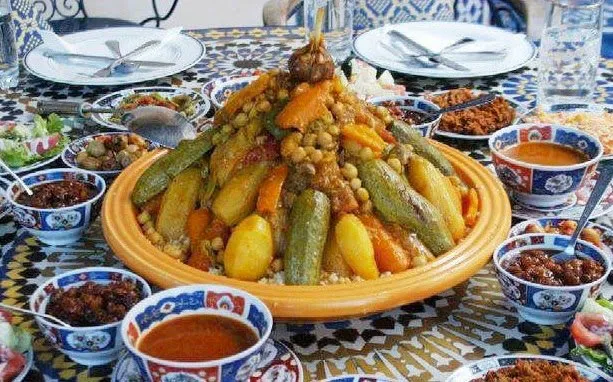
- Couscous: traditionally eaten on Fridays, with vegetables and meat.
- Pastilla: a sweet-and-savoury pie of thin pastry, chicken or pigeon, almonds and cinnamon.
- Tanjia: Marrakech’s slow-cooked meat in a clay jar.
- Mechoui: whole roast lamb for special occasions.
- Medfouna: the “Berber pizza” of Rissani, stuffed bread baked in sand-heated ovens, near the Merzouga desert.
Soups, salads and breads
- Harira: tomato, lentil and chickpea soup, essential during Ramadan.
- Zaalouk (aubergine) and taktouka (peppers): cooked salads.
- Msemen and baghrir: pancakes for breakfast with honey and butter.
Sweets and drinks
- Mint tea, the symbol of hospitality.
- Chebakia and almond pastries such as cornes de gazelle.
- Fresh orange juice in every square.
Tips
- Eat where locals eat: busy places mean fresh food.
- Drink bottled water.
- Vegetarians can easily find vegetable tagines and couscous.
Frequently asked questions
Is Moroccan food spicy?
Not usually. It uses lots of spices such as cumin, cinnamon and saffron, but it is aromatic rather than hot. Harissa is served on the side.
